
The One Thing to Eat at Every Meal for a Healthier Nervous System
The One Thing to Eat at Every Meal for a Healthier Nervous System
If you're searching for what to eat for nervous system health, you've probably already seen the long lists — twenty superfoods, ten supplements, five teas. Most of them aren't wrong. They're just overwhelming, and overwhelming usually means nothing changes.
Instead of another list, this post focuses on one principle. One thing to think about at every meal. It's the principle we keep coming back to with patients who want to support their nervous system without overhauling their entire kitchen.
We'll explain what it is, why it matters, and what the research says — then point you toward where the rest of the picture lives.
The Principle: Build Every Meal Around Real, Whole, Anti-Inflammatory Foods
That's it. The single most leveraged shift you can make is anchoring every meal to foods that are minimally processed, naturally low in added sugars, and rich in the nutrients the nervous system uses to function — particularly magnesium, omega-3 fatty acids, B vitamins, and polyphenols.
This idea isn't new. It's the foundation of dietary patterns like the traditional Mediterranean diet — which has been the subject of a 2022 systematic review on chronic musculoskeletal pain exploring its relationship with chronic pain, inflammation, and overall function.
The principle is simple. The execution is where most people get stuck.
Why the Nervous System Cares So Much About Food
The nervous system runs on raw materials. Neurons fire using minerals (magnesium, calcium, sodium, potassium). Myelin — the insulation around nerves — needs healthy fats. Neurotransmitters are built from amino acids, vitamins, and cofactors that mostly come from food.
Magnesium is one of the clearest examples. A 2020 review in Nutrients titled "Magnesium Status and Stress" explored its role in the stress response, neurotransmission, and sleep quality. Many modern diets fall short of recommended intakes — not because magnesium is rare, but because processed foods displace the leafy greens, nuts, seeds, and legumes that contain it.
The same logic applies to omega-3 fats, B vitamins, and the polyphenols found in colourful plant foods. The nervous system doesn't just want these inputs — it requires them.
What "Anti-Inflammatory" Looks Like on a Plate
It's less complicated than the wellness industry makes it sound.
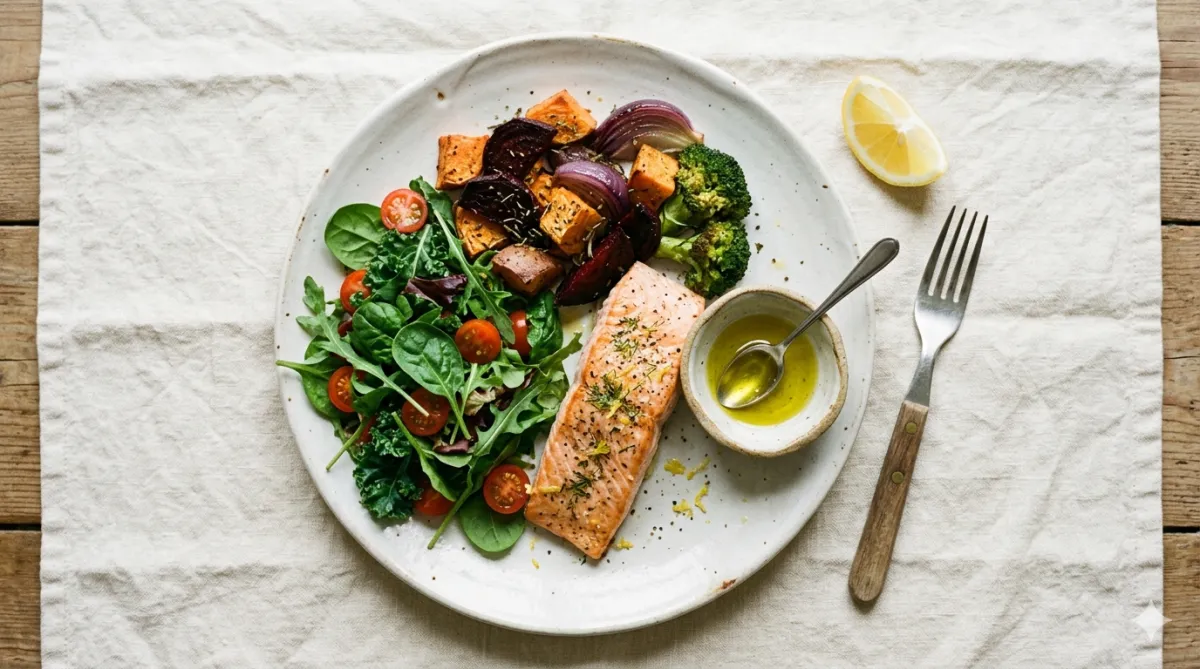
•Half the plate: non-starchy vegetables and leafy greens.
•A quarter of the plate: a quality protein — fish, eggs, well-raised meat, or legumes.
•A quarter of the plate: a real-food carbohydrate — kumara, potatoes, carrots, parsnips, pumpkin etc.
•A finishing fat: extra virgin olive oil, avocado, nuts, or seeds.
If you build most meals around something like this, you're naturally crowding out the inflammatory inputs we covered in the last post — without having to fight against cravings or count anything.
Where the Spine Comes Into the Picture
The nervous system runs through the spine. Structural shifts in the spine can change how the nervous system functions. The food you eat influences the environment that nervous system is operating in.
Structural Chiropractic focuses on the structural side of that equation — using five specific methods to assess what's happening with spinal position and structure. The dietary side is something we educate on but don't prescribe. The two work together.
If you're already doing the structural work, ignoring nutrition leaves leverage on the table. If you're already eating well, structural shifts may still be quietly limiting how the nervous system responds.
The Catch — and Why We're Hosting a Workshop
The principle in this post is real, but it's intentionally one piece. There are specific foods, ratios, and timing patterns that compound the effect — and a few common mistakes people make trying to eat well that quietly undercut their progress.
Rather than try to compress all of that into one blog post, we've built a free Patient Health Workshop around it.
The full picture — without the noise.
At the Patient Health Workshop we walk through the specific foods, the common mistakes, and the daily patterns that support nervous system function over the long term. Educational, no-pressure, and designed for people who want clarity, not another diet.