
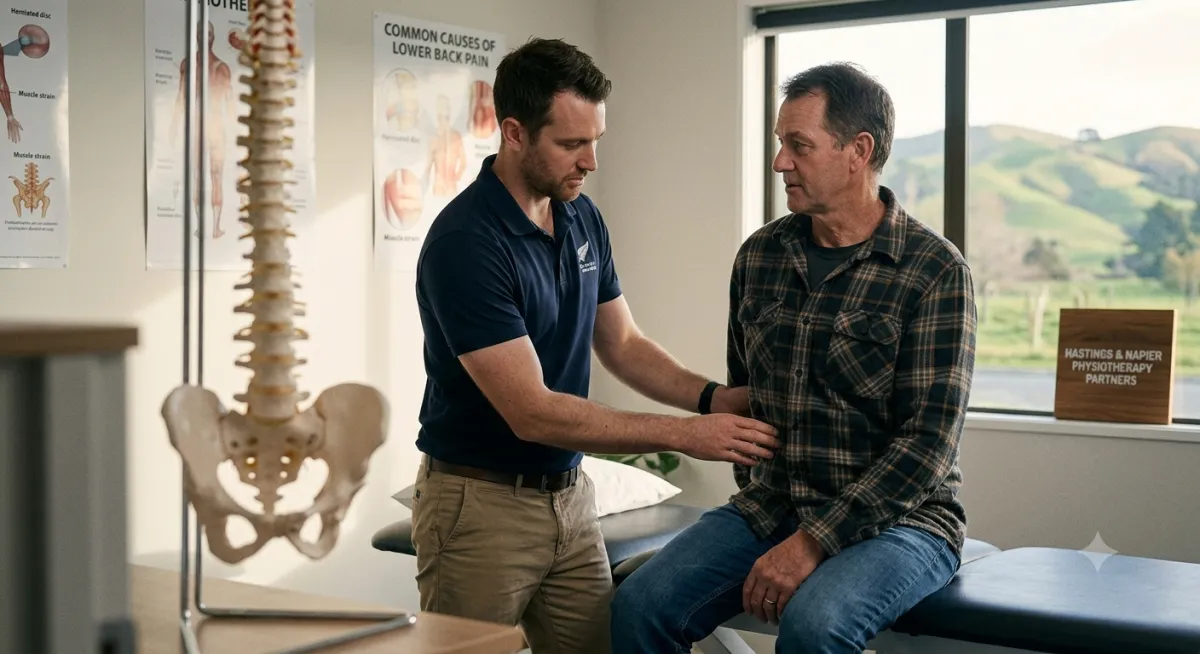
Understanding Lower Back Pain | Structural Chiropractic Hastings & Hawke's Bay
Understanding Lower Back Pain: Common Causes and General Information
Lower back pain is one of the most common reasons people seek advice from healthcare professionals.
At some point in life, many people will experience changes in their lower back that affect the way they move, work or enjoy everyday activities. While the experience varies from person to person, understanding some of the common factors associated with lower back pain can help people make informed decisions about their health.
At Structural Chiropractic, we believe education is an important first step. Understanding how the spine functions and recognising the many factors that may influence lower back health allows people to have more informed conversations with their healthcare providers.
Because every individual is different, ongoing or significant lower back pain should always be assessed by an appropriately qualified healthcare professional, such as a registered chiropractor, GP or other medical practitioner.
Understanding the Lower Back
The lower back, also known as the lumbar spine, plays an essential role in supporting the body.
It helps:
Support body weight.
Allow bending and twisting movements.
Assist with lifting and carrying.
Maintain balance and posture.
Protect important nerves travelling through the spine.
Because the lower back is involved in so many daily activities, it is exposed to a wide range of physical demands throughout life.
Lower Back Pain Is Often Multifactorial
Many people assume lower back pain has one obvious cause.
In reality, it is often influenced by a combination of factors, including:
Everyday posture.
Workplace demands.
Physical activity.
Previous injuries.
General health.
Age-related changes.
Lifestyle habits.
Understanding these factors is one reason why a professional assessment is so valuable.
Rather than relying on assumptions, healthcare professionals assess the individual and consider their unique circumstances before discussing appropriate options.
Everyday Activities Can Influence the Lower Back
Our daily routines place different demands on the lumbar spine.
Examples include:
Sitting at a desk for long periods.
Repetitive lifting.
Gardening.
Driving.
Manual work.
Caring for children.
Sporting activities.
These activities are all a normal part of life.
The important point is recognising that our bodies continually adapt to the work and movement patterns we perform most often.
Developing good movement habits and remaining physically active can support overall spinal wellbeing.
Movement Remains Important
When people experience changes in their lower back, they often become more aware of how frequently they use this part of the body.
Walking, standing, bending, sitting and lifting all involve the lower back.
Remaining active, where appropriate and guided by qualified healthcare professionals, is generally recognised as an important part of maintaining overall health.
The most suitable approach will vary from person to person, which is why individual assessment is recommended whenever there are concerns about spinal health.
The Role of Posture
Posture is one of many factors that may influence the lower back.
Remaining in one position for extended periods, whether sitting or standing, can place different demands on the body compared with moving regularly throughout the day.
Good posture isn't about standing perfectly still.
Instead, it involves developing awareness of how we move and making regular movement part of our daily routine.
Simple habits such as standing regularly, stretching between tasks and maintaining an active lifestyle may help support overall spinal wellbeing.
Why Professional Assessment Matters
No two people experience lower back concerns in exactly the same way.
For this reason, self-diagnosis can sometimes be misleading.
A registered chiropractor or another appropriately qualified healthcare professional can assess factors such as:
Health history.
Lifestyle.
Posture.
Spinal movement.
Occupational demands.
General wellbeing.
This comprehensive approach helps ensure advice is based on the individual rather than on general information alone.
Looking After Your Lower Back
Supporting lower back health often begins with everyday habits.
Some practical considerations include:
Remaining physically active.
Taking regular movement breaks.
Being mindful of prolonged sitting.
Using appropriate lifting techniques.
Maintaining a healthy lifestyle.
Seeking professional advice if concerns arise.
Small habits practised consistently often contribute to long-term wellbeing.
Structural Chiropractic and Lower Back Health
Structural Chiropractic focuses on understanding the relationship between spinal structure, posture and long-term spinal wellbeing.
When someone visits Structural Chiropractic, the emphasis is on understanding the individual rather than focusing solely on one area of concern.
A comprehensive assessment helps build a clearer picture of spinal health, allowing recommendations to be tailored to each person's unique circumstances.
Education is an important part of this process, helping patients better understand their spine and make informed decisions about their ongoing health.
Traditional chiropractors typically focus on three things: decreasing muscle spasm, increasing range of motion, and reducing pain. That's valuable, symptom-focused care — we believe those chiropractors are great at what they do.
Structural Chiropractic looks at it differently. Think of your spine as the foundation of a house — patch the same crack in the wall often enough, and eventually you're just repairing the same damage again and again. Rather than constantly repairing the same cracks, we focus on structural correction — using Specific Chiropractic Corrections, Neurological Re-Patterning and Joint-to-Joint Mobility to address the underlying Foundation, not just the damage it's causing.
As Structural Chiropractors, we're looking for a significant three-dimensional shift of the spine away from Normal. Because normal spinal motion is recognised as playing a role in healthy nervous system communication, we consider a structural shift in the spine an important factor to assess — not something to overlook.
Supporting the Hawke's Bay Community
People throughout Hastings, Napier and the wider Hawke's Bay region lead busy and active lives.
Whether you're working in an office, on a farm, in construction, healthcare, education or enjoying retirement, your lower back plays an important role in almost everything you do.
Structural Chiropractic is proud to support the Hawke's Bay community through patient education, professional assessment and personalised chiropractic care designed to help people better understand their spinal health.
Frequently Asked Questions
What is lower back pain?
Lower back pain refers to discomfort or changes experienced in the lumbar region of the spine. It is a common reason people seek professional healthcare advice.
What are some common factors associated with lower back pain?
Many factors may contribute, including posture, occupational activities, physical activity, previous injuries, lifestyle and age-related changes.
Does everyone experience lower back pain for the same reason?
No. Every individual is different, which is why a professional assessment is important.
Can everyday habits influence lower back health?
Yes. Sitting, lifting, physical activity and general lifestyle habits may all influence spinal health over time.
Should I ignore ongoing lower back pain?
Persistent or concerning symptoms should always be assessed by an appropriately qualified healthcare professional.
How can Structural Chiropractic help?
Structural Chiropractic provides professional assessment, patient education and personalised chiropractic care, helping individuals better understand their spinal health and the options available to them.
Related Articles
Understanding Your Spine: Why Alignment Matters for Everyday Life
What Is Structural Correction? A Guide to Long-Term Spinal Health
Why Good Posture Matters More Than Ever
Keeping Active and Supporting a Healthy Spine
About Structural Chiropractic
Structural Chiropractic is a leading chiropractic practice based in Hastings, proudly supporting individuals and families throughout Hastings, Napier and the wider Hawke's Bay region.
Led by Dr Ryno Tope, the practice is dedicated to helping people better understand their spinal health through education, professional assessment and personalised chiropractic care. The practice focuses on Structural Chiropractic—an approach that considers the relationship between spinal structure, posture and long-term wellbeing.
At Structural Chiropractic, the goal is to provide every patient with the information, support and professional guidance they need to make informed decisions about their health. Whether you're interested in improving your posture, learning more about spinal health or seeking a professional assessment, the team is committed to providing a welcoming and patient-focused experience.
About Dr Ryno Tope
Dr Ryno Tope is the founder and Clinical Director of Structural Chiropractic in Hastings. He is passionate about patient education and helping people throughout Hawke's Bay better understand the importance of spinal health, posture and structural wellbeing.
Through educational articles, videos and community engagement, Dr Tope is committed to empowering people with reliable information while providing professional chiropractic care tailored to each individual's needs.
Ready to Learn More?
If you have questions about your lower back, posture or overall spinal health, the team at Structural Chiropractic is here to help.
We proudly care for individuals and families throughout Hastings, Napier and the wider Hawke's Bay region, providing professional assessments, personalised chiropractic care and practical education that empowers people to better understand their spinal health.
Whether you're looking to learn more about Structural Chiropractic or would like to arrange an initial consultation with Dr Ryno Tope and his team, we'd be delighted to welcome you to our practice.
Structural Chiropractic
807 Heretaunga Street East
Hastings, Hawke's Bay
Phone: (06) 651 1004
Structural Chiropractic offers a complimentary consultation — a conversation, not a commitment — to discuss your health history, review what you've already tried, and help you determine whether structural correction is the right approach for you.