Bulletproof Why It Keeps Breaking Down
Lower back pain isn't random. It's predictable.
You sit. You stretch. You get some relief. Then it comes back. Same pattern. Different week.
At some point, you have to ask: Why does this keep happening?
If your lower back keeps flaring up, it's not a one-off issue. It's an underlying core problem that hasn't been addressed.
Why Your Lower Back Keeps Letting You Down
Most people treat back pain like an event. It's not. It's a pattern.
Tight hips. Weak glutes. Poor spinal support. Hours of sitting layered on top.
The body adapts. Not in a good way.
It shifts. It compensates. It loads the lower back more than it should.
So even when the pain settles… the reason it showed up is still there. That's why it keeps coming back.
What "Bulletproofing" Actually Means
This isn't about getting out of pain. It's about building a spine that can handle life without breaking down every few weeks.
That requires two things:
• Structure that supports load properly
• Muscles that work as a team
If either is off, the lower back picks up the slack. That's the cycle most people are stuck in.
Structural Care vs Temporary Relief
Most traditional approaches focus on the following goals:
• Decrease Muscle Spasm
• Increase Motion
• Reduce Pain
This is what many offer in terms of care and we believe they are great at what they do.
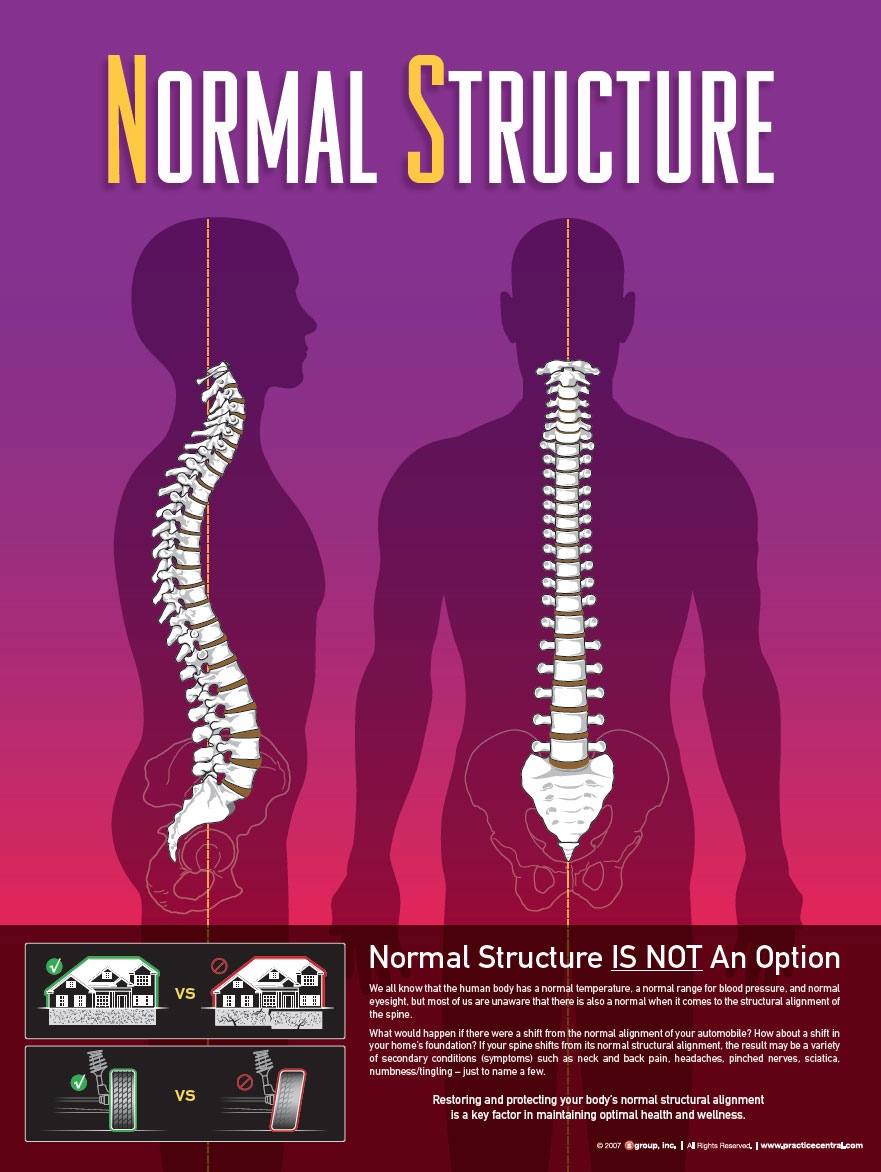
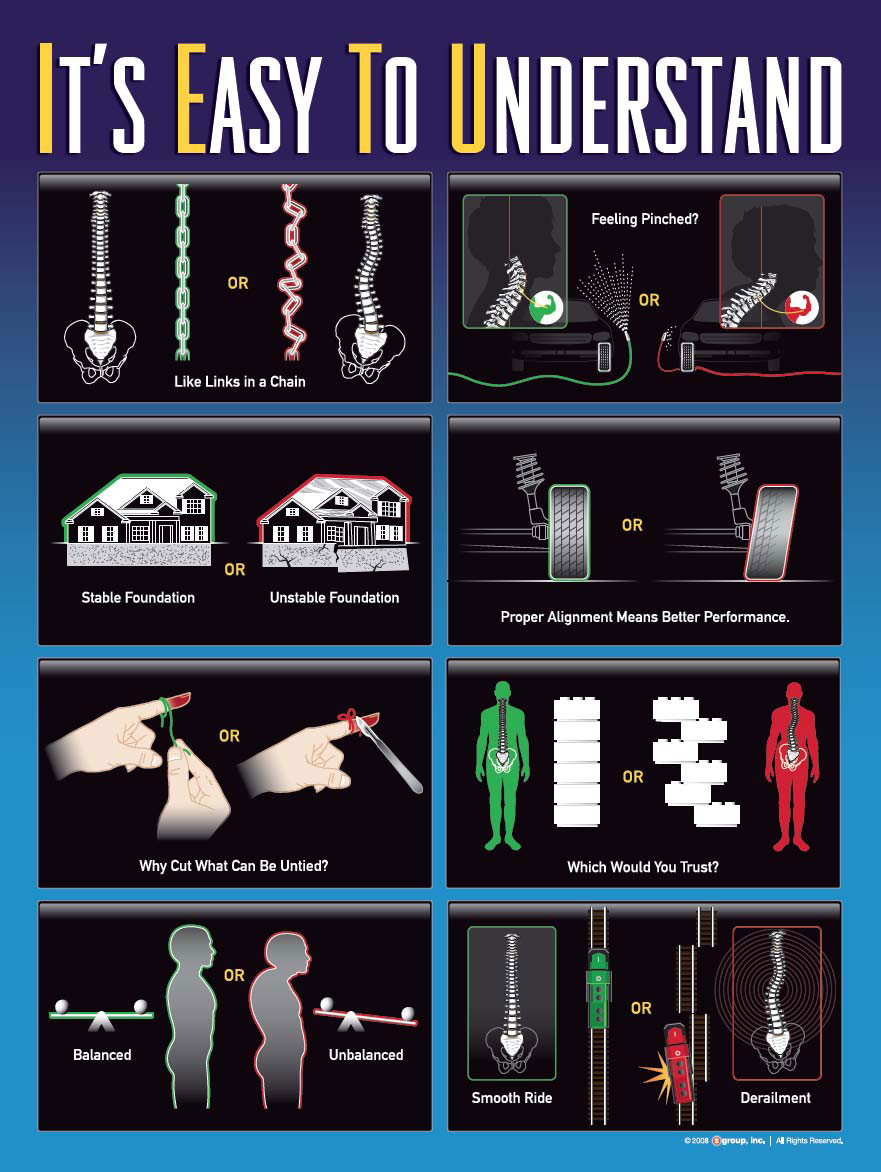
As a practice that focuses on Structural Correction, our goal is to look for underlying shifts in the spine — no different than an auto mechanic looking for underlying shifts in the framework of your car that may be impacting how the car performs, uneven wear of the tyres, rattling… and on and on… you get the point.
Structural Corrective Care is different.
In a world where there are many different therapies and treatments for many different secondary conditions (symptoms), Structural Chiropractic is unique. Structural Chiropractic is not a specific treatment for any Secondary Condition or disease, but rather it focuses on the primary problem of supporting nervous system function through structural correction.
When you have a Structural Shift obstructing the communication between your brain and your body and placing abnormal stress on your muscles, tendons, ligaments, and discs, it can eventually develop into what we refer to as SECONDARY CONDITIONS or symptoms.
The reason we call these symptoms SECONDARY CONDITIONS is because they are a result of, as you might have guessed, a PRIMARY CONDITION or an underlying cause. Some of these SECONDARY CONDITIONS include:
• Low back pain
• Neck pain
• Headaches
• Leg Pain
• Arm pain
• Mid back pain
It is important to note however that even though a Structural Shift may play a role in the aspects of our health that we may be aware of or feel, it most likely affects our health in ways that we aren't even aware of.
How We Assess What's Really Going On
Before any care starts, we look at your structure from multiple angles. Not guesswork. Not a quick check.
We use:
• Digital Structural Analysis
• Functional Movement Assessment
• Weight Distribution Scales
• Advanced Spinal Palpation
• Thermography
Why?
Because one method misses things. Five gives clarity. The better we understand your structure, the better we can guide correction.
What Actually Helps (and What Doesn't)
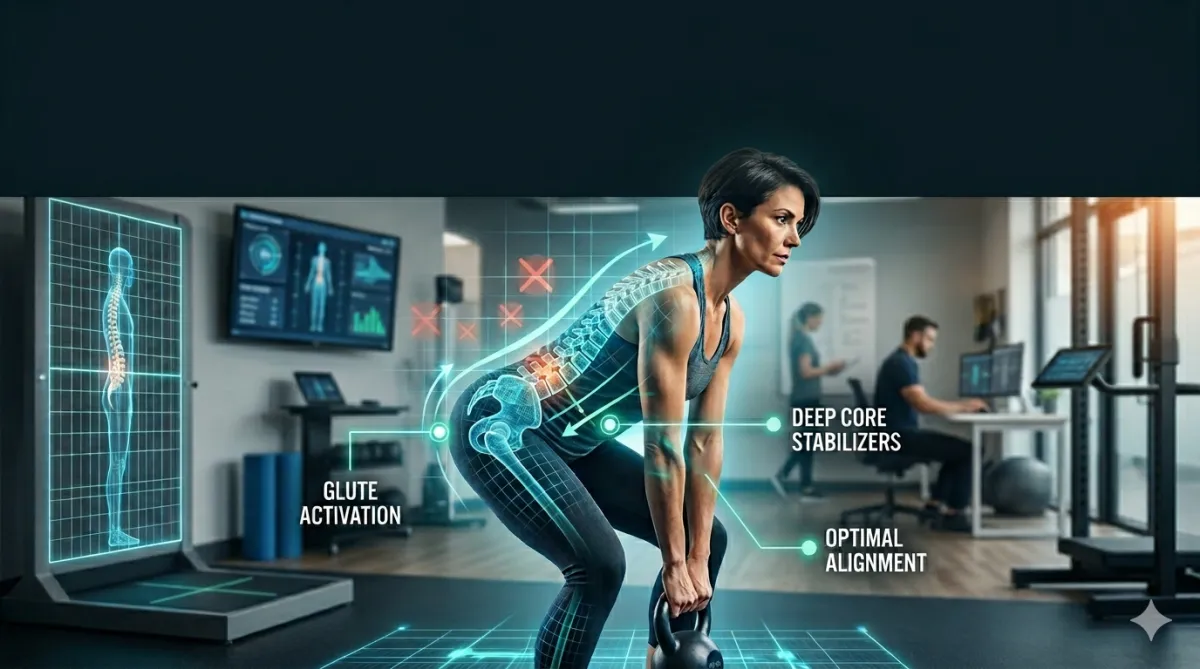
1. Core strength matters — but only if it's used properly. Prioritise deep stabilisers over surface muscles. Dead bugs, bird dogs, and pallof presses train your core to control spinal movement rather than just create it. That's a different job than planks. The problem is, if your spine isn't positioned well to begin with, you're just training stability on top of instability.
2. Posture matters — but not the way you think. Instead of trying to hold a "perfect" position (which lasts about 90 seconds), set up your environment: screen at eye level, hips at or above knee height, lumbar support at the natural curve of your lower back — not mid-back. Move every 30–40 minutes. Ergonomics manages the load. It doesn't change where your structure sits.
3. Movement helps — but it won't undo compensation patterns. Prioritise low-load, controlled movement — walking, swimming, light mobility work. If you're doing yoga, choose stability-focused styles over deep passive stretching, which can increase mobility at segments that are already compensating. Movement keeps the joints circulating and reduces stiffness. It doesn't reposition an underlying structural shift.
4. Lifting technique matters — and it's worth getting right. Master the hip hinge first: hips back, neutral spine, core braced before the load moves. Keep the weight close to your centre of gravity throughout. This is non-negotiable and it makes a real difference to the mechanical demand on your spine. Good form limits the stress. It doesn't remove it if the structure underneath isn't stable.
This is where most people get stuck. They're doing good things… on top of a structure that's still working against them.
Why Waiting Makes It Harder
Most people wait until the pain is bad enough. By then, the pattern is established. The body has adapted. Compensations are locked in. That's why it takes longer than expected to address.
A proactive approach is different. You're not chasing pain. You're correcting the reason it shows up.
The Bottom Line
If your lower back keeps flaring up, it's not bad luck. It's a sign your spine isn't handling load the way it should.
You can keep managing it… Or you can find out what's actually causing it.
Ready to Take a Different Approach?
We offer a complimentary consultation to see if structural correction is the right fit for you.
This is not for people looking for a quick fix. It's for people who are done going in circles and want to address the problem properly.
If that's you, reach out and we'll take a look.
Structural Chiropractic — Focusing on Structural Correction 807 Heretaunga Street East, Hastings — 06 651 1004 — structuralchiro.co.nz